
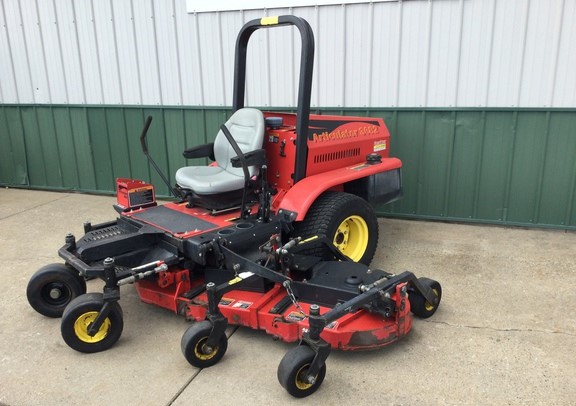
For landscaping professionals, municipalities, golf estates, and agricultural operations across South Africa, maintaining vast green spaces demands more than an ordinary household mower. It requires commercial-grade mowing equipment — powerful, durable machines designed to work longer, cover larger areas, and deliver consistent results day after day.
Commercial mowers are the backbone of professional turf management. They combine efficiency, precision, and reliability, ensuring every cut meets the high standards expected in parks, schools, sports facilities, corporate campuses, and residential developments.
This guide explores everything you need to know about commercial mowers — how they differ from residential machines, the types available, key features to consider, maintenance practices, and why they are indispensable for professional lawn care across South Africa’s diverse climates.
What Is a Commercial Mower
Alt text: lineup of commercial ride-on and zero-turn mowers ready for landscaping work
A commercial mower is a heavy-duty machine engineered for large-scale and continuous lawn maintenance. It features stronger engines, wider cutting decks, reinforced frames, and industrial-grade components designed for long operating hours.
Unlike residential mowers, which are intended for occasional weekend use, commercial mowers are built to withstand demanding workloads, rough terrain, and extended operating seasons. They can cut several hectares of grass per day with consistent precision.
These machines are a vital investment for landscaping companies, government parks departments, golf clubs, and property maintenance contractors that prioritise productivity and professional results.
Advantages of Commercial Mowers
Durability and Longevity
Commercial units use thicker steel decks, heavy-duty transmissions, and high-performance engines that ensure reliability over thousands of operational hours.
Speed and Efficiency
Wider cutting widths — often between 1.2 and 3 metres — allow operators to cover more ground in less time.
Superior Cutting Quality
Professional-grade blades deliver an even, manicured finish, even under challenging conditions.
Comfort for Long Hours
Ergonomic controls, suspension seats, and vibration-dampening systems reduce fatigue during extended workdays.
Reduced Downtime
High-capacity fuel tanks, quick-access maintenance points, and robust cooling systems allow longer operation between refuelling and servicing intervals.
For businesses, these advantages directly translate into lower labour costs, faster turnaround, and higher customer satisfaction.
Types of Commercial Mowers
Each type of commercial mower serves a specific purpose depending on property size, terrain, and grass density.
Walk-Behind Mowers
Alt text: landscaper operating large walk-behind commercial mower on estate lawn
Compact yet powerful, these are ideal for narrow spaces, landscaped gardens, or steep inclines where ride-on units can’t reach. They are favoured by professional gardeners and maintenance teams working in estates or parks with obstacles and flowerbeds.
Stand-On Mowers
A hybrid between walk-behind and ride-on units, these allow the operator to stand on a platform for better visibility and mobility. They’re popular in South Africa’s urban landscaping sector due to their agility in tight spaces.
Ride-On Mowers
Ride-on commercial mowers are designed for larger open areas such as school fields, sports complexes, or municipal parks. They offer high speed and comfort for long sessions, with deck widths typically between 100 cm and 180 cm.
Zero-Turn Mowers
These advanced machines pivot within their own footprint, offering unmatched manoeuvrability. They’re ideal for properties with trees, benches, and other obstacles. Zero-turn technology enables faster turns, reducing overlap and saving time on each pass.
Front-Mount Mowers
Front-mount mowers place the cutting deck at the front, allowing better reach under bushes and around edges. Many models accept attachments such as snow blades, sweepers, or aerators, turning them into year-round utility vehicles.
Tractor or Tow-Behind Mowers
For agricultural or large municipal spaces, heavy tractor-driven or tow-behind gang mowers provide maximum coverage. They’re perfect for airfields, sports grounds, and estates spanning multiple hectares.
Key Features to Look For
When selecting a commercial mower, the focus should always be on performance, efficiency, and long-term reliability.
Engine Power
Most commercial mowers use twin-cylinder petrol or diesel engines ranging between 20–40 horsepower. For high-altitude South African areas, models with strong torque and efficient air filtration perform best.
Cutting Deck Width
A larger deck covers more area but requires higher power and open terrain. For golf courses or sports fields, decks between 150 and 250 cm are standard.
Blade System
Look for durable, replaceable blades that maintain sharpness longer. Mulching blades are ideal for nutrient recycling in eco-sensitive zones.
Fuel Capacity
Commercial machines typically feature tanks holding 15–30 litres, ensuring uninterrupted operation for hours.
Transmission and Drive System
Hydrostatic drives deliver smooth acceleration and better control, while 4WD systems enhance traction on hilly or wet ground.
Operator Comfort
Suspension seats, adjustable steering, and low vibration levels are essential for full-day productivity.
Safety Features
Automatic blade shut-off, roll-over protection structures (ROPS), and emergency brake systems protect operators during demanding tasks.
Choosing the Right Commercial Mower for South Africa
South Africa’s climate and terrain vary widely, influencing mowing equipment selection.
- Coastal areas such as Durban and Gqeberha face high humidity and salt exposure — stainless steel or corrosion-resistant components are critical.
- Highveld regions like Johannesburg and Pretoria experience strong sunlight and dry winters — look for engines with efficient cooling systems.
- Western Cape conditions require adjustable decks for wet winter mowing and dry summer trimming.
Grass varieties also differ: Kikuyu, LM grass, and Buffalo require distinct cutting heights. Commercial mowers with adjustable decks (25–100 mm) allow flexibility across different landscapes.
Contractors serving municipalities and estates often keep multiple mower types in their fleets to handle diverse terrains efficiently.
Maintenance Tips for Commercial Mowers
Alt text: technician performing maintenance on commercial mower engine in South Africa workshop
Routine maintenance is essential to protect your investment and ensure consistent performance.
- Clean the deck daily to prevent grass buildup and corrosion.
- Inspect blades weekly and sharpen or replace as needed. Dull blades increase fuel use and damage turf.
- Check oil and air filters regularly. South Africa’s dusty conditions require frequent cleaning.
- Lubricate moving parts including wheel bearings, cables, and pivot joints.
- Monitor belts and pulleys for wear. Replace at signs of cracking or slipping.
- Keep tyres inflated for even cutting and better traction.
- Service engines according to manufacturer schedules, using approved lubricants.
A well-maintained mower not only lasts longer but also performs at optimal efficiency, reducing fuel and labour costs over time.
Safety Guidelines for Commercial Operators
Operating large mowers involves risk if not used correctly. To maintain workplace safety:
- Train all staff on proper start-up, shutdown, and transport procedures.
- Conduct pre-shift inspections to check brakes, steering, and blades.
- Wear appropriate PPE — gloves, boots, hearing protection, and eye shields.
- Avoid mowing near bystanders or vehicles.
- Never mow on steep slopes beyond manufacturer recommendations.
- Engage parking brakes before dismounting.
- Store fuel safely and refuel only when engines are cool.
Adhering to these practices ensures compliance with South African occupational safety standards while preventing costly accidents.
Environmental Considerations
Sustainability is becoming a major priority in the landscaping industry. Many South African municipalities are adopting eco-friendly mowing technologies, such as hybrid and electric commercial mowers.
Battery-powered commercial units eliminate fuel use and reduce emissions, making them ideal for noise-sensitive zones like hospitals, schools, and office parks.
Mulching blades also play a key environmental role by recycling clippings into natural fertiliser, improving soil quality and reducing waste disposal.
Additionally, efficient mowing schedules — based on grass growth rather than fixed dates — conserve fuel and lower carbon footprints.
Latest Innovations in Commercial Mowers
The commercial mower market continues to evolve rapidly, with several technological innovations reshaping turf management in South Africa.
Hybrid Power Systems
Combining petrol engines with electric cutting decks, hybrid mowers offer extended runtime and reduced emissions.
Smart Controls and Telematics
Fleet-tracking software now allows managers to monitor performance, fuel usage, and maintenance schedules remotely.
GPS-Assisted Steering
Guided mowing paths increase coverage precision and eliminate overlapping passes, saving time and fuel.
Enhanced Suspension and Operator Platforms
Modern ride-on mowers feature adjustable suspension seats and ergonomic control layouts for comfort during 8-hour shifts.
Noise Reduction Engineering
Improved mufflers and acoustic shielding make machines quieter, enabling early-morning or public-area operation.
These advancements make commercial mowing faster, safer, and more cost-effective for contractors and government departments alike.
Common Problems and Quick Fixes
| Problem | Possible Cause | Solution |
|---|---|---|
| Uneven cutting | Dull or bent blades | Sharpen or replace blades |
| Poor traction | Low tyre pressure | Inflate tyres to correct PSI |
| Loss of power | Dirty air filter or fuel issue | Clean filters, replace old fuel |
| Excess vibration | Loose bolts or unbalanced blade | Tighten fittings, balance blade |
| Deck clogs | Wet grass buildup | Mow in dry conditions, clean deck |
Regular checks prevent these minor issues from escalating into costly repairs or downtime.
Applications of Commercial Mowers in South Africa
Commercial mowers are used in numerous sectors nationwide:
- Municipal Parks: Maintaining public green spaces in cities and towns.
- Golf Courses: Keeping fairways, roughs, and surrounds uniformly trimmed.
- Sports Facilities: Managing football, rugby, and cricket fields.
- Residential Estates: Providing pristine presentation in gated communities.
- Corporate Landscapes: Maintaining large office campuses and industrial parks.
- Educational Institutions: Keeping school and university grounds safe and attractive.
- Agricultural and Game Estates: Clearing access roads and open fields efficiently.
The ability to handle continuous use makes commercial mowers indispensable across these industries.
Future of Commercial Mowing in South Africa
The commercial mowing sector is shifting toward automation, electrification, and smart resource management.
Manufacturers are developing autonomous robotic mowers capable of mapping and maintaining vast lawns without constant supervision. Hybrid and battery systems will continue replacing traditional petrol engines as energy storage improves.
Given South Africa’s growing sustainability focus, future fleets will rely on renewable energy charging stations and data analytics to optimise fuel and labour efficiency.
As urban green spaces expand and property developments increase, the demand for commercial mowers will only grow, driven by innovation and environmental responsibility.
Conclusion
Commercial mowers are the workhorses of South Africa’s landscaping and turf-care industry. Built for endurance, power, and accuracy, they enable professionals to maintain vast outdoor spaces with efficiency and precision.
Whether cutting municipal parks, luxury golf estates, or agricultural grounds, these machines represent an investment in productivity and professionalism. By choosing the right model, maintaining it carefully, and embracing new technologies, contractors and facilities managers can ensure flawless results while reducing operational costs.
In a country where green spaces define quality of life and aesthetics, commercial mowers are not just tools — they are the foundation of sustainable, high-performance landscaping.